
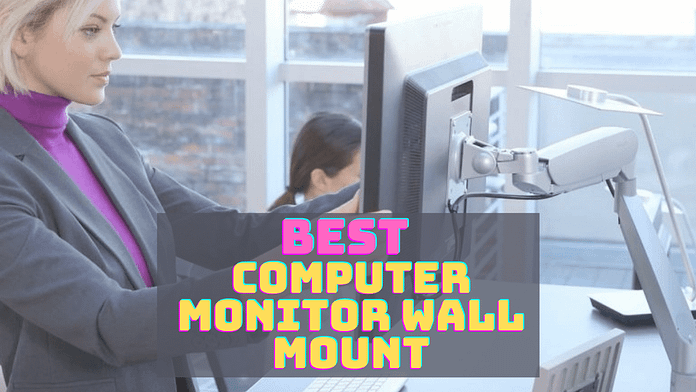
Why wall mount a computer monitor in 2026?
A computer monitor wall mount frees up your entire desk, locks the screen at exactly the right eye height, and gives your setup that clean, floating-screen look you cannot get with a stock stand. Whether you work from home, game in a small room, or run a dual-monitor workstation, a good wall mount arm is one of the cheapest upgrades with the biggest visual and ergonomic payoff.
We compared the current wall mounts and wall-mount-style arms that are actually worth buying in 2026 — checking VESA fit, weight ratings, range of motion, and real-world build quality. Every pick below links to a live Amazon listing.
Quick Answer: Best Monitor Wall Mounts in 2026
- Best budget wall mount: WALI Full Motion Wall Mount (13–32 inch) — cheap, sturdy, full-motion
- Best premium single mount: VIVO G100B Premium Aluminum — pneumatic arm, 17–32 inch
- Best for large screens: Amazon Basics Full Motion Articulating (up to 39 inch, 40 lbs)
- Best for dual monitors: NB North Bayou F160 Dual Arm
- Best premium desk-arm alternative: Ergotron LX — 10-year warranty
Best monitor wall mounts at a glance (2026)
| Wall mount | Best for | Screen size | Load | Motion | Approx. price |
|---|---|---|---|---|---|
| WALI 1330LM | Budget all-rounder | 13–32″ | — | Full motion | ~$30 |
| MOUNT PRO Wall Arm | Height adjustment | 13–32″ | — | Full motion + vertical slide | $36.99 |
| VIVO G100B | Premium single mount | 17–32″ | 15.4 lbs | Pneumatic arm | ~$40 |
| Amazon Basics Articulating | Large / heavy screens | 12–39″ | 40 lbs | Full motion | ~$35 |
| NB North Bayou F160 | Dual monitors | 2× 17–27″ | 19.8 lbs per arm | Gas spring, full motion | ~$60 |
| NB North Bayou F80 | Single value arm | 17–30″ | 19.8 lbs | Gas spring | ~$40 |
| Ergotron LX | Premium desk-arm option | Up to 34″ | 7–25 lbs | Constant force | ~$180–210 |
Prices are approximate and change often — check the live Amazon listing for the current price.
1. WALI Full Motion Monitor Wall Mount (1330LM) — Best Budget Wall Mount
The WALI 1330LM is the wall mount we recommend to most people. It fits 13 to 32 inch screens, uses the standard VESA 75×75 / 100×100 pattern, and the articulating arm folds nearly flat against the wall when you do not need it — then pulls out, tilts, and swivels when you do.
For around $30 you get the same full-motion freedom that TV mounts offer, sized for computer monitors. It is ideal for a bedroom, kitchen, or small home office where the screen needs to sit above a desk or shelf. Just make sure you hit a wall stud or use proper anchors, and keep heavy 32 inch panels within the load rating.
2. MOUNT PRO Height-Adjustable Wall Mount — Best for Finding the Perfect Height
The MOUNT PRO single wall mount adds a vertical sliding track to the classic articulating arm, so you can raise or lower the screen after installation without tools. That matters more than people expect: most people mount once, then realize the screen sits an inch too high or low.
It handles 13 to 32 inch monitors on VESA 75×75 or 100×100 patterns, with full tilt and swivel on the arm. At $36.99 it sits between the WALI and the VIVO, and it is the pick we suggest for shared spaces where people of different heights use the same screen.
3. VIVO G100B Premium Aluminum — Best Premium Single Wall Mount
If you want the smoothest, most premium feel in a true wall mount, the VIVO G100B is the one. Its pneumatic (gas-spring) arm floats a 17 to 32 inch screen up to 15.4 lbs, so the panel moves with one finger and holds any position exactly — the same feel you get from high-end desk arms, mounted to the wall.
The aluminum build looks far better than budget steel arms, and the detachable VESA plate makes single-person installation much easier: screw the plate to the monitor, hang it, then secure the arm. For a home office wall setup that you will use every day for years, this is our favorite.
4. Amazon Basics Full Motion Articulating Mount — Best for Large Screens
Have a 34 inch ultrawide, a 39 inch panel, or a screen that doubles as a TV? The Amazon Basics full motion articulating mount is rated for 12 to 39 inch displays up to 40 lbs — far beyond what most monitor wall mounts handle.
The arm extends, tilts, and swivels like a TV mount, with a locking tilt mechanism that keeps heavy panels exactly where you set them. It is the safest pick in this list for big screens, and the price stays reasonable. Just confirm your VESA pattern and stud locations before ordering — large panels need solid anchoring.
5. NB North Bayou F160 Dual Arm — Best for Dual Monitor Setups
The North Bayou F160 carries two 17 to 27 inch screens (up to 19.8 lbs each) with independent gas-spring arms, so both monitors float and adjust separately. You can run one screen in landscape for reference and swing the other to portrait for code or documents — the same trick we describe in our vertical monitor guide.
Build quality is a step above the price suggests: all-metal arms, decent cable channels, and tension adjustment for different panel weights. It is technically a desk-clamp mount rather than a wall plate, but it delivers the same floating, wall-mounted feel while keeping the screens fully adjustable.
6. NB North Bayou F80 — Best Value Gas-Spring Arm
The North Bayou F80 is the single-arm version of the F160 formula: one gas-spring arm for 17 to 30 inch monitors up to 19.8 lbs, with tilt, swivel, and 360 degree rotation. For around $40, it is the cheapest way to get a screen that glides like an arm three times the price.
Set the spring tension once for your panel’s weight and the screen stays exactly where you leave it — high, low, pushed back, or pulled close. If your desk edge is awkward for a wall plate but you still want the floating-monitor feel, this is the value pick.
7. Ergotron LX — Premium Desk-Arm Alternative
Not sold on drilling into a wall? The Ergotron LX is the desk arm nearly every other arm is compared against. Its Constant Force mechanism floats a 7 to 25 lb monitor up to 34 inches with one finger, holds position for years without drooping, and is backed by a 10-year warranty.
It costs several times more than a wall mount, but if you adjust your screen constantly during the workday — standing, sitting, sharing the screen — the LX is the buy-once option. Pair it with a proper ergonomic desk setup and your neck, shoulders, and desk surface will all thank you.
What is a monitor wall mount?
A monitor wall mount is a bracket that attaches your screen to the wall instead of a desk stand. The monitor bolts onto a standardized VESA plate (the four-hole grid on the back of nearly every monitor), and the mount — fixed, tilting, or full-motion — holds the screen at whatever height and angle you choose.
The main types:
- Fixed mounts hold the screen flat against the wall. Cheapest and lowest profile, but no adjustment after install.
- Tilting mounts add a few degrees of up/down tilt — useful when the screen sits above eye level.
- Full-motion (articulating) mounts add an arm that extends, swivels, and rotates. Best for work and gaming where you move the screen often.
Monitor wall mount vs monitor arm: which do you need?
Choose a wall mount when desk space is tight or you want the screen above a shelf, console, or standing desk — the desk stays completely clear. Choose a desk arm when you reposition the screen many times a day or rent your place and cannot drill. Both use the same VESA plate, so your monitor works with either.
How to choose a monitor wall mount (6 things to check)
1. Your monitor’s VESA pattern
Turn the monitor around and look for four threaded holes in a square. Almost all monitors use 75×75mm or 100×100mm. The mount must match — most on this list support both. No holes? VESA adapter plates exist for most popular monitors.
2. Weight and size limits
Weigh the monitor without its stand (a 27 inch panel is usually under 10 lbs; a 32 inch ultrawide can pass 20 lbs) and stay under the mount’s rating with margin. Overloading a mount is the number one cause of sagging and failure.
3. Your wall type
Wood studs are the strongest anchor — use a stud finder and bolt into the stud, not just the drywall. For brick or concrete, use masonry anchors. Never hang a monitor from drywall alone.
4. Range of motion
Fixed mounts suit a single viewing spot. If you share the screen, game, or need glare control, pay for tilt and full-motion extension — the WALI and VIVO picks above both handle this well.
5. Cable management
Look for channels or clips along the arm. Wall mounts put cables on display, so routing matters — leave enough slack in the HDMI/DisplayPort cable for the arm to extend fully without straining the connector.
6. Warranty and support
VIVO and WALI offer multi-year support and replacement parts; Ergotron backs the LX for 10 years. Cheap no-name mounts rarely answer support email — worth a few dollars more for a brand.
How high should you mount a monitor on the wall?
The top of the screen should sit at or just below your seated eye level, with the screen about an arm’s length away. Sit in your usual position and measure from the floor to your eyes — that height (roughly 40–46 inches for most desks) marks where the top edge of the screen belongs. A full-motion mount makes fine-tuning easy after install. Our ergonomic desk setup guide covers the full posture checklist.
Once mounted, take five minutes to calibrate the display — brightness and color look different at a new viewing distance and angle.
Mounting a gaming monitor on the wall
Gaming monitors wall-mount just like any other — check the VESA holes and weight first. Leave extra cable slack so the arm can extend during intense sessions, and position the screen so your eyes hit the center when you lean back. If you are choosing a panel to hang, our best IPS monitors for gaming and 144Hz gaming monitor guides cover the current picks.
Frequently asked questions
Does my monitor have a VESA mount?
Most monitors sold in the last decade do. Check the back for four threaded holes in a 75×75mm or 100×100mm square, or search your model number plus “VESA”. A few budget and all-in-one monitors lack the pattern — those need an adapter.
Can I use a TV wall mount for a computer monitor?
Yes, if the VESA pattern and weight rating match your monitor. TV mounts are often overkill for a small monitor but are the right choice for large panels — the Amazon Basics pick above is essentially a TV mount rated for 39 inch screens.
How do you mount a monitor without VESA holes?
Use a VESA adapter plate for your specific monitor model — manufacturers and third parties sell them for most popular screens. Glue-on or strap solutions are not safe for a monitor you care about.
Can you mount a monitor on the wall without drilling?
Not safely for anything heavier than a few pounds. Drywall alone cannot hold a monitor. Alternatives: a clamp-on desk arm like the North Bayou F80, or a freestanding stand. If drilling, always anchor into a stud or use proper masonry anchors.
Do monitor wall mounts come with screws?
Yes — every pick in this guide includes the VESA screws for the monitor plus wall bolts. Wall type varies, so you may need to buy masonry anchors separately for brick or concrete walls.
Are monitor wall mounts universal?
The VESA plate is universal, but screens vary in weight and size. A mount that fits a 24 inch office panel may not be rated for a 34 inch ultrawide. Match the mount’s size range and weight rating to your specific monitor.
Final verdict
For most people, the WALI 1330LM is the best computer monitor wall mount in 2026 — inexpensive, full-motion, and easy to install. Step up to the VIVO G100B for a premium pneumatic arm, choose the Amazon Basics articulating mount for big screens, and grab the F160 if you are mounting two monitors. Measure your VESA pattern, hit a stud, and enjoy the desk space you get back.


